

Jump to a section
Beta readers
How to Prepare a Beta Reader Packet with LoreVia
A practical workflow for sending beta readers the right manuscript, context, boundaries, questions, and feedback structure without overwhelming them.

A beta reader packet is not a press kit, a defence of the manuscript, or a workbook that turns a volunteer into an unpaid editor. It is a small set of materials that tells a reader what they are receiving, how to read it, when feedback is useful, and which questions matter for this draft.
The best packet reduces avoidable confusion without controlling the reader’s response. It provides enough context to begin, enough structure to finish, and enough freedom for surprise. If readers spend their energy decoding file names, wondering whether typos matter, or answering thirty leading questions, the packet has failed before the manuscript receives honest attention.
LoreVia can help prepare the draft and identify focused questions, but the packet should remain human-sized. Readers need the book, a clear invitation, and a practical path back to you.
Decide what this beta round is for
Do not recruit readers until you can name the stage and purpose of the round. An early structural beta has different needs from a near-final reader checking clarity and emotional response.
Possible purposes include:
- testing whether the central premise and opening create momentum;
- identifying confusing causality or missing information;
- checking a character or relationship arc after revision;
- assessing pacing in a particular act;
- finding continuity problems across a long draft;
- learning where reader expectations diverge from the intended payoff;
- checking whether content notes and emotional intensity are appropriate for the audience.
Choose two or three priorities. If the packet asks readers to judge everything from theme to commas, answers will become shallow or inconsistent.
Write the purpose in neutral language: “This is a structural beta of the second draft. I am most interested in clarity, pacing through the middle, and whether the sibling relationship changes convincingly.” This tells readers where the book is without asking them to praise those areas.
Finish the author-only cleanup first
Beta readers are valuable because they bring fresh attention. Do not spend that attention on problems you can already find. Before sending the draft, complete an author pass for chapter order, missing scenes, placeholder text, repeated paragraphs, obvious naming inconsistencies, broken formatting, and comments that were never meant to leave your workspace.
Run a focused continuity review. Check major names and aliases, timeline anchors, character knowledge, injuries, important objects, world rules, and open threads. You do not need a perfect manuscript. You need one coherent enough that readers can respond to the intended story rather than production accidents.
LoreVia can help surface chapter structure, character records, relationships, timeline signals, and possible continuity concerns. Review the findings that affect comprehension. Correct extraction issues separately; fix manuscript issues in the manuscript itself.
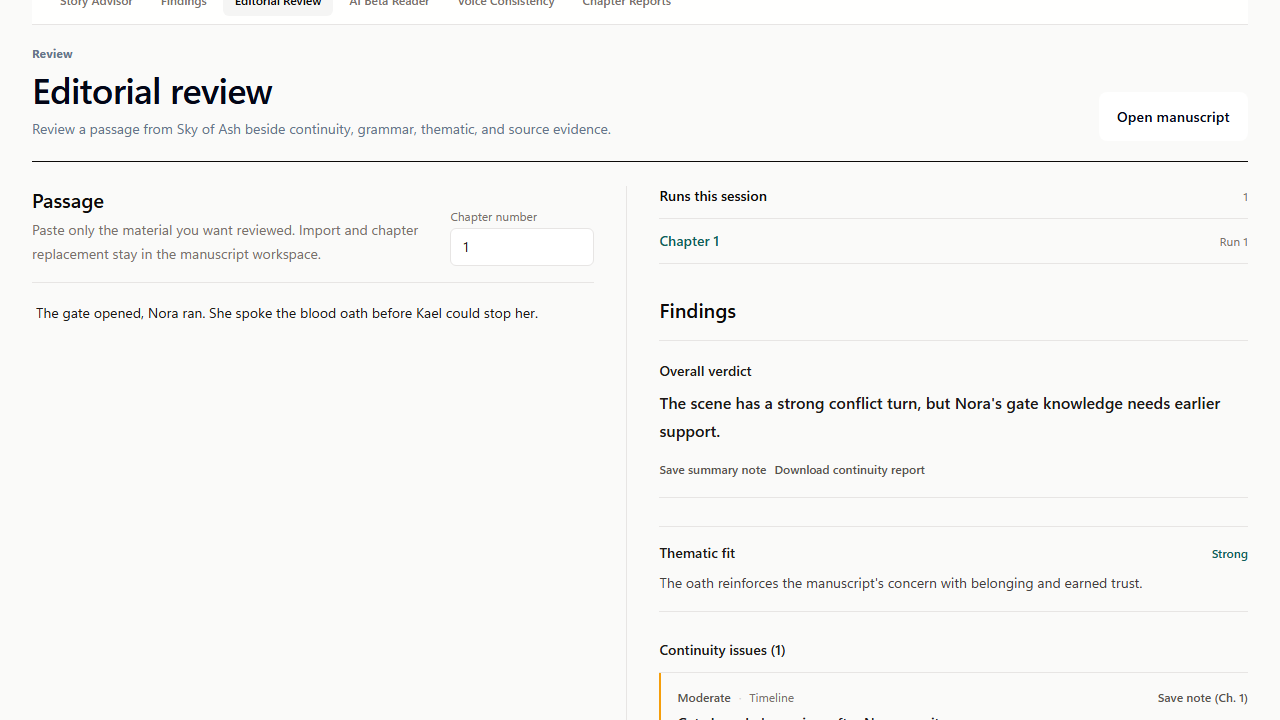
Export the exact version you intend to share and label it clearly. Include the title, draft label, and date in the filename. Preserve a private backup so later feedback can always be matched to the pages a reader saw.
Give readers a short orientation note
The orientation note should fit on one screen. Include:
- title, genre, approximate word count, and draft stage;
- a one- or two-sentence premise without a sales pitch;
- the purpose of this beta round;
- expected reading window and feedback deadline;
- preferred format for notes or comments;
- content notes relevant to informed consent;
- whether the manuscript is confidential and how files should be handled;
- your permission for a reader to stop if the book is not a fit.
Do not explain the intended theme, justify unusual choices, or tell the reader which character to like. Orientation that interprets the story contaminates the response you are trying to observe.
Decide whether a cast or context sheet is necessary
Most novels should stand on their own. A beta packet should not repair introductions the manuscript failed to make. However, a small reference can be appropriate for a later series volume, an unusually large ensemble, a project with invented terminology, or a reader joining a targeted continuity round.
Keep the sheet factual and brief. A cast list might include name, pronouns, and role without revealing private motives. A series context note might summarise only canon the target audience would already know from earlier books. A glossary should define terms that readers are expected to remember, not every invented noun.
If several readers repeatedly need the reference to understand early chapters, treat that as manuscript feedback. The packet should support navigation, not carry essential storytelling.
LoreVia’s character and relationship views can help you identify which names recur and which connections are likely to need a reminder. Curate the result. Do not export a giant internal bible into the reader packet.
Ask questions that produce usable reactions
Good beta questions are specific enough to focus memory and open enough to preserve the reader’s experience. Ask about moments, expectations, choices, and changes rather than requesting a verdict.
Weak: “Did you like Mara?”
Stronger: “At what point did you understand what Mara wanted, and was there a scene where her choices stopped making sense to you?”
Weak: “Was the twist surprising?”
Stronger: “What did you expect the locked-room thread to become before the reveal, and which clue most shaped that expectation?”
Weak: “Was the pacing good?”
Stronger: “Where did your urge to continue reading noticeably rise or fall?”
Include five to eight end-of-book questions for most rounds. Add chapter-specific questions only around the areas being tested. A reader facing a form after every chapter may begin reading for the questionnaire rather than the story.
Useful categories include:
- What did you believe the book’s central problem was after the opening?
- Where were you confused about cause, location, time, or character knowledge?
- Which character choice felt least supported by earlier scenes?
- Where did your attention slow, and what were you waiting for?
- Which promise or question did you most expect the ending to address?
- What surprised you, and did it feel prepared in retrospect?
- Which relationship changed most clearly? Which changed too suddenly?
- What remained unresolved in a way that felt accidental rather than deliberate?
Use manuscript analysis to sharpen the questions
Generic questions produce generic feedback. Before finalising the packet, review the current analysis and your own uncertainty. If the relationship map shows a long gap between two major characters, ask how the later reunion feels. If a timeline has a compressed travel window, ask readers when they believed events occurred rather than telling them there may be an error.
If continuity review finds a possible contradiction you have chosen not to fix yet, convert it into a neutral reader question: “What did you understand about who held the archive key after Chapter 12?” Do not ask, “Did you notice that the key continuity is wrong?”
Grounded chapter evidence can help locate where a concern begins and where to ask for reaction. It should not be used to pre-write the answer. The beta reader’s independent understanding is the evidence you need.
Make feedback easy to deliver
Offer one primary channel. This might be comments in a document, a structured form, a beta workspace, or a conversation plus written summary. Explain the difference between in-line reactions and end-of-book answers.
In LoreVia’s beta reading workflow, authors can define questions and readers can submit comments, direct answers, and anchored feedback. Whatever tool you use, test access before sending invitations. Confirm that readers can open the manuscript, save progress, and submit feedback without creating avoidable accounts or permissions trouble.
Set expectations about spoilers between readers. Individual responses are usually cleaner than a shared discussion at first because early opinions do not shape later ones. A group conversation can follow after responses are recorded.
Tell readers whether you will acknowledge receipt, whether follow-up questions are likely, and when you expect to review feedback. Do not promise an immediate line-by-line reply.
Respect time, privacy, and the option to stop
State the approximate word count and deadline before a reader commits. Ask whether the schedule is realistic. A kind “yes” followed by a rushed read helps no one.
Include content notes for material readers may reasonably need to opt into. Keep them descriptive rather than dramatic. If confidentiality matters, say what you are asking: do not forward the file, quote publicly, or upload it to another service. Avoid legal theatre for ordinary volunteer exchanges, but make boundaries explicit.
Give readers permission to stop and still send partial feedback. Learning where and why someone stopped can be valuable. It is better than silence from a reader who feels they have failed an obligation.
If compensation, reciprocal reading, or a gift is offered, agree on it before the work begins. Gratitude should not become pressure to praise the manuscript.
Keep the packet itself small
A complete packet can be five items:
- The clearly named manuscript or secure reading link.
- A one-page orientation note.
- Optional short cast, glossary, or series context.
- Five to eight focused questions.
- Instructions and deadline for returning feedback.
Anything else must earn its place. Mood boards, playlists, maps, author notes, extensive lore, and revision histories may be enjoyable, but they can influence interpretation or create work readers did not accept.
The manuscript is the reading experience. The packet should make that experience easier to enter, not compete with it.
Pilot the packet before sending the full round
Ask one trusted person to open every link and read the orientation as though they know nothing about the project. Can they identify the draft stage, deadline, feedback method, and priorities? Are permissions correct? Do page numbers or chapter labels match your questions? Is the file readable on the device they will use?
If the round uses a beta workspace, submit a test comment and answer. Confirm notifications and author-side visibility. Remove test data before readers begin if it could confuse the project.
This pilot often reveals more practical problems than another hour polishing the questionnaire.
Process feedback without counting votes
The packet shapes collection, but author judgment shapes revision. Group feedback by the underlying experience: confusion, expectation, boredom, disbelief, emotional distance, or continuity. Several different comments may identify the same root issue.
Do not treat majority opinion as instruction. One reader may notice a factual break others glide past. Several readers may dislike an intentional discomfort that the book needs. Look for evidence in the manuscript and decide what promise the story is making.
Separate diagnosis from solution. Readers are reliable reporters of where they felt something; their suggested fix may not serve the whole book. Preserve the chapter or scene anchors so you can inspect the source of each reaction.
Thank readers before debating details. Follow up with narrow questions only when the answer will change a decision.
Archive the round as part of revision history
Keep the manuscript version, packet, reader list, dates, responses, and your resulting decisions together. Mark which feedback was accepted, deferred, or declined and why. This prevents later rounds from repeating resolved questions or comparing reactions to different unseen drafts.
When the next beta begins, write a new orientation rather than quietly reusing the old one. The draft stage and priorities have changed. Preserve useful question patterns but remove items whose answers no longer matter.
LoreVia can connect beta feedback with author review and revision planning, but the underlying discipline is simple: one known manuscript, one clear round, and traceable decisions.
Send an invitation readers can trust
A strong packet communicates respect. It tells people what the work is, what you are asking, how long it may take, and how their response will be used. It removes preventable friction while leaving their reading experience intact.
Prepare the manuscript. Choose the round’s purpose. Write a short orientation. Ask focused, neutral questions. Test the handoff. Then stop explaining the book and let someone meet it.
That final restraint is part of revision. A beta reader cannot tell you what the manuscript communicates if the packet has already supplied the answer.
Sources and further reading
- LoreVia for authorsLoreVia · Reviewed 2026-08-09
Continue reading
Related stories
Revision workflow
How to Use LoreVia During a Real Revision Week
A five-day revision workflow that turns manuscript analysis, grounded questions, continuity findings, and verification into focused edits.

Character systems
How Relationship Tracking Changes a Character Rewrite
A scene-level method for rewriting character arcs by tracking trust, power, intimacy, conflict, and the consequences each relationship carries.